
Impending Loss of SNAP Benefits Adds to a Distressing 2025
It would be harrowing enough if the impending loss of SNAP benefits to millions nationwide were the only hardship Americans faced in 2025. But the federal government’s plan to stop distributing benefits to nearly 42 million people—many of whom voted for our current Executive and Legislative members in last year’s General Election—comes while people are still reeling from:
- The current federal government shutdown, which has furloughed nearly 800,000 workers.
- July’s budget reconciliation bill, which mandated the largest cuts to SNAP in the program’s history.
- The downsizing of the federal workforce, which led to the elimination of nearly 300,000 jobs. According to a Forbes article, cuts to federal agencies and grants, as well as implementation of artificial intelligence amid concerns over White House tariffs, are the leading causes of job losses this year.
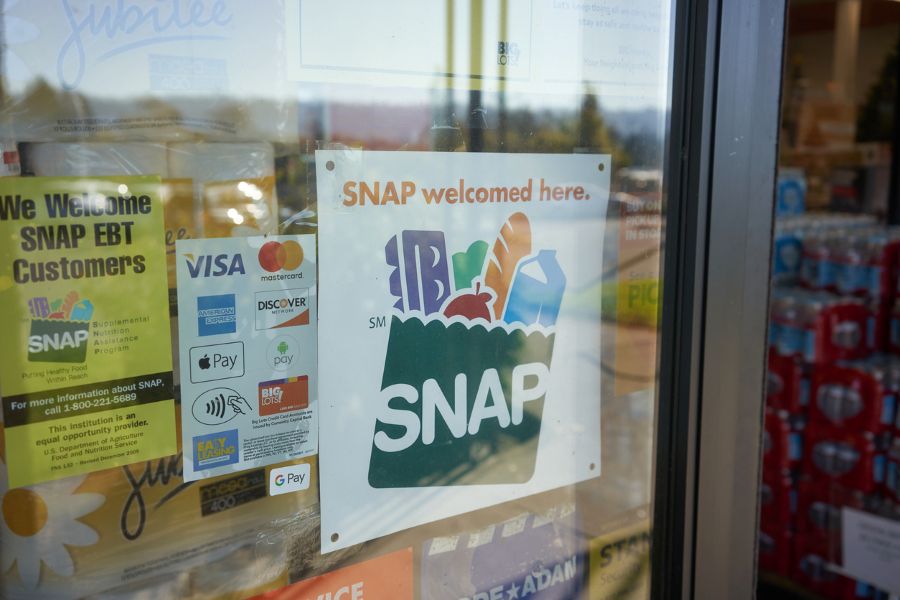
America is testing its own resilience. Amid the second-longest federal government shutdown in U.S. history, SNAP funding has not been replenished beyond October. The US Department of Agriculture (USDA) oversees SNAP; the USDA said on its website that the program has run out of money and, therefore, SNAP benefits for November will not be issued. The USDA has the authority to pull funds from other sources to replenish SNAP, as it did for the Women, Infants, and Children nutrition program, but thus far, the USDA says there are no plans to do so.
According to USDA data, SNAP (formally known as the Supplemental Nutrition Assistance Program) has an average of 41.7 million participants each month and accounts for 70% of the USDA’s nutrition assistance spending annually.
The USDA says that SNAP benefits reduce the depth and severity of poverty in recipient households, particularly among children, who experience the nation’s highest poverty rates. According to the Food Research and Action Center, SNAP benefits lifted 4.6 million people out of poverty in 2015 alone.
“In the United States, we’re really fortunate to have a lot of federally funded nutrition programs that support low-income people in our community, and SNAP is the biggest nutrition program in our country,” said United Way’s Director for Ending Hunger, Sara Seelmeyer, in Monday’s episode of our podcast, Hourglass. “SNAP supports more than 200,000 people in King County and nearly one million in Washington State.”
About 34% of SNAP recipients in Washington state are under 18, and about 22% are seniors. Many SNAP benefits recipients are already trying to make ends meet without paychecks; according to the state Employment Security Department, the government shutdown has furloughed about 80,000 federal workers statewide. Thousands more have lost their jobs because of reductions to the federal workforce.
Also, the state received about $2 billion in SNAP benefits from the federal government last year, and the July budget reconciliation bill requires states to shoulder a percentage of SNAP costs. Washington state, already mired in a multi-billion-dollar budget deficit, must pay hundreds of millions for SNAP annually.
Seelmeyer noted that the current concerns about the lack of SNAP funding could be easily resolved if the federal government moved contingency funds to the program.
“In early October, we thought WIC benefits might run out in the first or second week of the month, but the USDA did hear community demand across the country,” Seelmeyer said. “The USDA used its discretionary authority to move contingency funding into WIC to ensure the program will remain funded throughout October and through most of November.
“Even if the shutdown continues, the USDA has the authority to move money into SNAP and ensure the program remains funded,” Seelmeyer added. “That is something that could happen today or tomorrow. There is really no need for all of us to be worried about SNAP when the USDA has this authority.”

Seelmeyer said that Washington distributes SNAP benefits between the 1st and 20th days of each month, which means some households will be impacted immediately on November 1st, while others will be affected if SNAP isn’t replenished before November 20th.
Seelmeyer said that November benefits will be issued retroactively when the government reopens. She said the Washington Department of Social and Health Services will be able to issue delayed benefits within about 18 hours of the federal government’s reopening.
Fortunately, the state, private, nonprofit sectors are working to fill the void.
At United Way of King County, we’ve distributed emergency grants to support food banks in King County and are working with partners on a broader emergency response plan. We also work annually to tackle food insecurity through programs like Home Grocery Delivery, Breakfast After the Bell, and Summer Meals. Our advocacy efforts in recent years helped expand the eligibility for more than 92,000 students statewide to receive free school meals under the USDA’s Community Eligibility Provisions.
We also applaud the efforts of state and local governments to meet Washingtonians’ needs. According to the Seattle Times, the state has directed millions to food banks. Washington state is also among more than two dozen states that have sued the federal government for not replenishing SNAP benefits. The Times also reported that Mayor Bruce Harrell, Congresswoman Pramila Jayapal, and the City of Seattle will host a resource fair for workers impacted by the shutdown.
Still, more needs to be done.
How can you get involved? Click here to donate to United Way’s Our Neighbor Fund, which enables us to tackle issues such as homelessness and financial instability with bold solutions and community-driven programs to create lasting change.
We also encourage you to reach out to your representatives in Congress and the US Senate and urge them to replenish SNAP funding and end the government shutdown. To find your representative, click here.
Comments