
Seattle Indian Services Commission: Hourglass Podcast Episode #134
Good news happens. This week’s podcast episode features a conversation about the United Way-supported Seattle Indian Services Commission.
We chatted with Commission chair Iris Friday and Development Manager Demarus Tevuk about the commission’s history and its plans for a project that will provide affordable housing and economic opportunities for Indigenous people.
See the podcast transcript below. You can listen to the full episode on Spotify, Apple, or wherever you listen.
Transcript of Hourglass Episode #134
Demarus Tevuk 0:00
I think it’s very important for the Urban Native and Indigenous community to build assets for our community. There’s been decades of no investment in our community to build the spaces. This is a really great time to finally build the spaces that we’ve been talking about for more than 20 years.
Joe Burris 0:22
This is Hourglass, the podcast for United Way of King County in Seattle. Coming up, a conversation about the past and future of the Seattle Indian Services Commission. The United Way supported commission was launched in 1972 to provide housing and planning services and programs to address the needs of Indigenous residents in King County. For this episode, we’ll chat with Commission Chair Iris Friday and its Development Manager Demarus Tevuk about the commission’s history and its plans for a Native Village and Gateway project that will provide affordable housing, holistic family services, and economic opportunities for Indigenous people, all while celebrating Indigenous cultures. We will also discuss our community partnership kit offerings and a volunteer opportunity with United Way’s grantee El Centro de la Raza. I’m your host Joe Burris. Thanks for tuning in.
Joe Burris 1:25
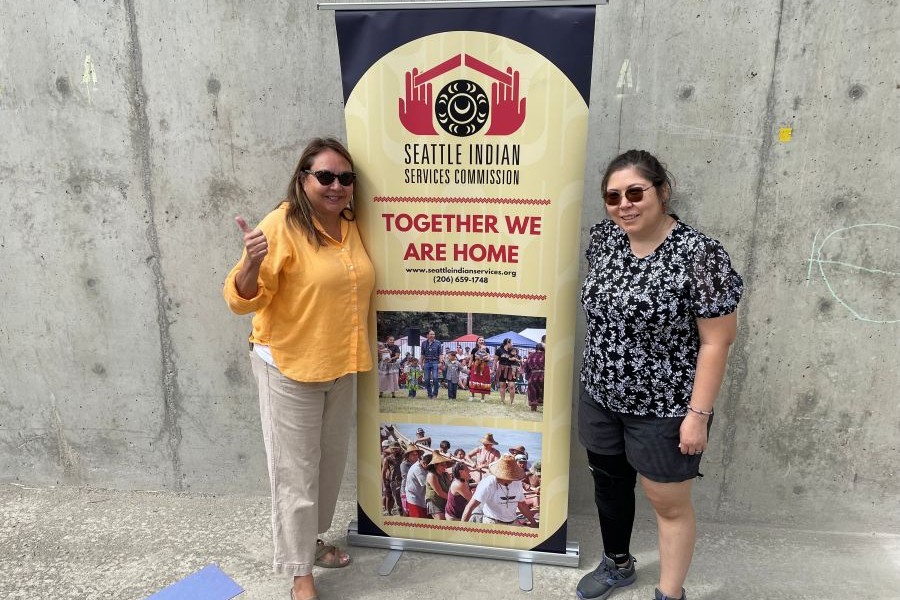
It is Saturday, August 22 in Seattle, and as the summer sun burns off the morning cloud cover, folks arrive at the community art market in the city’s Little Saigon neighborhood. Amid the sounds of old-school pop music playing in the background, visitors check out products mainly from Indigenous artisans that include jewelry, apparel, and household items. There’s also a space for creating temporary murals and a supply drive for Indigenous communities impacted by the wildfires that have burned across eastern and central Washington. The art market was sponsored by the Seattle Indian Services Commission, which has been creating gathering spaces that support our area’s Indigenous residents for more than 50 years. The Seattle Indian Services Commission, or SISC, was chartered by the City of Seattle in 1972, and it says it is the city’s oldest public development authority. SISC was launched to provide housing and planning services, as well as programs to address the needs of Indigenous residents in King County. SISC’s creation was tied to the American Indian Women’s Service League, which was founded in partnership with Pearl Warren, a Makah tribal member and community leader, who sought to address concerns over urban Indigenous living conditions in the 1950s and 1960s in Seattle. Today, SISC works with the gathering of Indigenous organizations that provide services and resources, including United Way grantees Chief Seattle Club, United Indians of All Tribes, and Mother Nation. SISC also used the art market to spread the word about its upcoming Native Village and Gateway project, which will provide holistic family services, create economic opportunities for Indigenous people, celebrate Indigenous cultures, and offer much-needed affordable housing. The art market was held on the grounds of the former Pearl Warren Building, which once housed SISC and other organizations. Earlier this year, the building was razed to make way for the Native Village and Gateway Project. SISC owns the 1.1-acre property and says it expects to break ground on the Native Village and Gateway Project in about four years.
Joe Burris 3:52
SISC receives support from United Way as part of our Indigenous Communities Fund. Since the fund was launched in 2020, we’ve granted about $5 million to local groups to address the many needs in King County’s Indigenous communities. United Way is proud to have provided SISC with flexible operating funds to maintain essential staffing as the organization advances projects like the Native Village and Gateway. Indigenous Communities Fund support has strengthened SISC’s capacity to manage pre-development funding and pursue new public investments. Hourglass recently sat down with SISC Chair Iris Friday and its Development Manager Demarus Tevuk for a conversation about the commission’s history and its future efforts to continue serving Indigenous communities in our area. First, we caught up with Demarus at the Community Art Market. She spoke about the purpose of the event and the importance of the Native Village and Gateway Project.
Demarus Tevuk 4:57
We’re here at the “Connecting Through Culture” Community Art Market, and this is our first public event at the site of our future Native Village and Gateway project. And yeah, we want to have events and activities here and get people excited about the projects that we’re building. So the Native Village projects will have basically a community center on the ground floor, there will be a basketball gym, a the Bernie Whitebear Hall of Ancestors (which is the gallery hall), a commercial kitchen (that serves the mall), and then an early learning childcare center that will also be served by the commercial kitchen. We’ve got plans for rooftop outdoor spaces for the children’s play area, but also gardens for native traditional food and medicinal like ethnobotanical plants. And then above all of that will be around six floors of affordable housing.
Joe Burris 6:11
Okay. Where we’re standing, what used to be here?
Demarus Tevuk 6:14
Oh yes, this used to be the Pearl Warren Building, and it was built in 1995. It was administrative offices for the Seattle Indian Health Corps. The Seattle Indian Services Commission had office space there, and then the Seattle Indian Center also had their programming in the building. So it was more than a two-story office building that was more than 20,000 square feet, which was pretty big, and then there were two floors of parking. So we’re standing on the lowest level parking garage.
Joe Burris 6:51
Okay.
Demarus Tevuk 6:52
So there used to be a parking garage up above.
Joe Burris 6:54
Right.
Demarus Tevuk 6:55
So some of the walls are remaining.
Joe Burris 6:57
Right.
Demarus Tevuk 6:58
Um, and yeah. So the site’s 1.1 acres.
Joe Burris 7:04
1.1?
Demarus Tevuk 7:04
It’s pretty big.
Joe Burris 7:05
Right, right, right. And when do you think this vision is going to take root and break ground?
Demarus Tevuk 7:12
Well, we’re working on design, financing, and permitting right now, so that hopefully that process will be done in two years, and then we can start construction. And usually, construction takes two years, so we’re looking at four years from now.
Joe Burris 7:37
Okay.
Demarus Tevuk 7:29
If everything lines up with funding and permits, approvals… There there is also–we are in the International Special Review District.
Joe Burris 7:42
Okay.
Demarus Tevuk 7:42
So we have to get approval for designs from the ISRD group.
Joe Burris 7:47
Oh,
Demarus Tevuk 7:48
But we’ve already started to, you know, build a relationship with them. They know they approve the demolition of our building.
Joe Burris 7:58
So now lastly, what would a facility like that mean for this area?
Demarus Tevuk 8:05
Well, specifically for the Urban Native and Indigenous Community, our community does not have a community center. We have cultural gathering spaces, but we don’t have a community center. There’s no easy place for people to come together and be with each other, have events, shop, get connected to resources, or or have like events. There are spaces, but they’re not specifically community centers. So that’s the goal, like the focus of the Native Village project, is the community center space. But we also really want to provide affordable housing, and our goal is also to have the housing really focus on family size because our community needs family-size housing.
Joe Burris 8:28
United Way funds a lot of organizations that have their own affordable housing, including Chief Seattle Club. What does it mean for your organizations to take that on yourselves in this city, in this county?
Demarus Tevuk 9:16
Well, the Seattle Indian Services Commission was one of the first, very first public development authorities that were chartered by the city, and so the commission was set up to pursue development for the for the urban Native communities. So this is a really important part of continuing the legacy that Seattle Indian Services has, and to be a resource for our community with the development project that we’re working on. I think that it’s very important for the Urban Native and Indigenous community to build assets for our community. And there, there’s been decades of no investment in our community for to build the spaces, and so now there’s programs like Seattle EDI, King County EDI. There’s support, there’s a desire to help us build these places. This is a really great time to finally build the spaces that we’ve been talking about for more than 20 years. So, I think it’s you know when I look back at the history of the commission and the spaces that used to exist in Seattle, I feel like we’re trying to bring all of those programs and services and spaces back to our community.
Joe Burris 10:54
On the Friday before the art market, we asked Demarus and Iris to delve more into the history of SISC, and we asked about the commission’s supply drive to support Indigenous communities impacted by the recent wildfires in eastern and central Washington. Here’s what they had to say:
Demarus Tevuk 11:13
I think the origins of the Seattle Indian Services Commission is really interesting because, as a public development authority, it really was set up as an umbrella organization where several other Native organizations were nested underneath the org. So the very first annual report from the commission included United Indians of All Tribes Foundation, American Indian Women’s Service League, Seattle Indian Center, the Seattle Indian Health Board-they all acted independently but worked together, and they all provided different services, and eventually they all became their own nonprofits. But we always tie the history of the Seattle Indian Services Commission back to the legacy of Pearl Warren, because she founded the American Indian Women’s Service League, and then all of these other organizations came about because of her leadership, including the Seattle Indian Services Commission.
Joe Burris 12:27
Tell us a little bit about Pearl Warren.
Demarus Tevuk 12:30
She was a Makah leader that lived in Seattle, and she saw a real need for the Native people that were moving to Seattle to have them be connected to native culture and housing, job training, and a lot of just a lot of services that were needed to to live in Seattle.
Joe Burris 12:56
Okay, lots of excitement being generated around your Village and Gateway project. Where do things stand at this moment?
Iris Friday 13:03
So we’re currently in the pre-development stages of that project. We put together some renderings. We’re looking at developing a fundraising plan to get that off the ground, and we’ll be applying to the City of Seattle Office of Housing for housing funding for the affordable housing project, and then are looking at other options to fund the other community spaces as part of that project. Currently, Demarus is on staff as our Development Manager and has really been working to support the organizational capacity building of the organization, and we’ll be bringing on an executive director soon, who will be a permanent full-time employee that will work in partnership with Demarus to move the organization forward and continue to build the capacity.
Demarus Tevuk 13:58
I think there’s a lot of potential for the programs that we can do, there’s a lot of things that we can do right now. I think in the next few months we’ll start highlighting native-owned businesses through our social media, and then I would really like for us to build a native business directory on our website. But I have a lot of ideas for what we could do now. It’s just a question of capacity. And I also think our community is really looking for those services because another part of our mission is to provide economic development services for our community members.
Joe Burris 14:37
Great. Now, talk about your supply drive for those impacted by the wildfires in central and western Washington.
Demarus Tevuk 14:46
That supply drive is a collaborative effort with United Indians of All Tribes Foundation. They will be helping us to bring the supplies over to the eastern side of the state. I I had that idea a few days ago.
Joe Burris 15:03
Oh, really?
Demarus Tevuk 15:04
Yeah, and I reached out to United Indians and asked if they would like to collaborate on a supply drive, and we had a meeting, and they did a drive at the end of July. So yeah, we had a meeting, and they explained what the response was like, and that they got a lot of supplies. So we’re just kind of recreating the opportunity for our community members to donate again, like similar items, clothing, bedding, just essentials, toiletries, baby items. So they’ll be parking a box truck at our site where the supplies can be just directly put into the truck, and then when they’re able to bring everything over, they’ll be delivering it for us. So I just thought, you know, we’ve got an opportunity for our community to come together. We really should do what we can to help our relatives. I think we all know someone that’s been impacted by the fires.
Joe Burris 16:15
So lastly, if I’m listening to this, and I want to get involved with what you’re doing. How do I do that?
Demarus Tevuk 16:23
We have Instagram, Facebook, and LinkedIn social media accounts. We also have a website, SeattleIndianServices.org. We have a newsletter that you can sign up and get updates about the activities that we’ve been doing, things that we’re celebrating, because we do have some fundraising that we’ve got pre-development funding for the Native Village project. You know milestones on our project, and I think staying in touch with us over social media and through our newsletter, so that you can find out about future events that we’ll be hosting.
Joe Burris 17:11
Thank you, Iris. Thank you, Demarus, for your time on Hourglass today. Really appreciate it!
Iris Friday 17:17
Thank you so much! We appreciate it.
Demarus Tevuk 17:19
Thank you.
Joe Burris 17:21
For more information about the Seattle Indian Services Commission, log on to seattleindienservices.org. For more about our Indigenous Communities Fund, log on to uwkc.org, click on “What We Do,” click on “Equity Fund,” and click on “Indigenous Communities Fund.”
Joe Burris 17:43
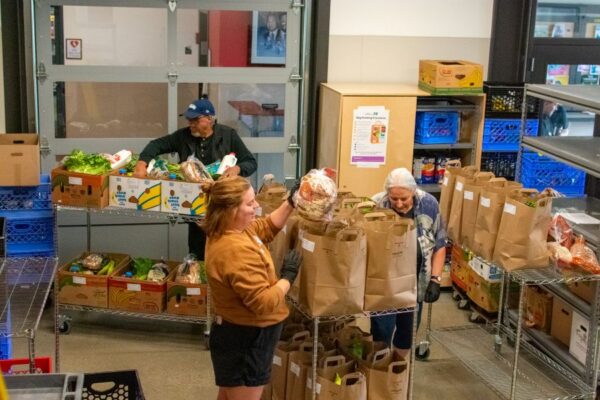
If you’re a company interested in volunteering and team building, consider United Way’s Community Care Kit opportunities. Community Care Kit offerings are packages loaded with essential items for King County residents, based on needs identified by neighborhood-based organizations. Assembling and distributing those kits is part of a volunteer project known as Kit Builds, and we’ve hosted kit builds for companies and organizations in our area for more than a year. Among the organizations that have taken part in kit builds are Amazon, the Gates Foundation, PACCAR, and Microsoft. For information on how you can sponsor a community care kit offering opportunity, log on to uwkc.org, click on “Get Involved,” click on “Volunteer,” and under Group Volunteering, click on “Learn More.”
Joe Burris 18:35
Join United Way of King County as we celebrate our partnership with El Centro de la Raza, the voice and hub of our area’s Latino community. Come craft flowers and organize auction items on Saturday, September 26th, for El Centro’s annual “Building the Beloved Community Gala.” Be part of an exciting event that raises funds for 43 programs and services, benefiting more than 20,000 individuals and families across our region. The event will take place at the Seattle Convention Center on the fifth floor. Tasks include decorating the dining room, setting up the registration tables, and helping with the photo booth. For more information, log on to uwkc.org/events. At United Way of King County, we are working side by side with communities to build an equitable future for everyone. “Hourglass: United Way” is a podcast that highlights how we and our partners spend time making a difference in our communities. Our work is made possible by generous donations from people like you. Please send all comments and suggestions about our podcast to hourglass@uwkc.org. Be sure to follow us on Instagram, Facebook, and LinkedIn via @UnitedWayKC, and to learn more about our work or to support United Way, log on to uwkc.org.
Joe Burris 20:10
I’m your host, Joe Burris. Thanks for listening. Until next time.
Comments